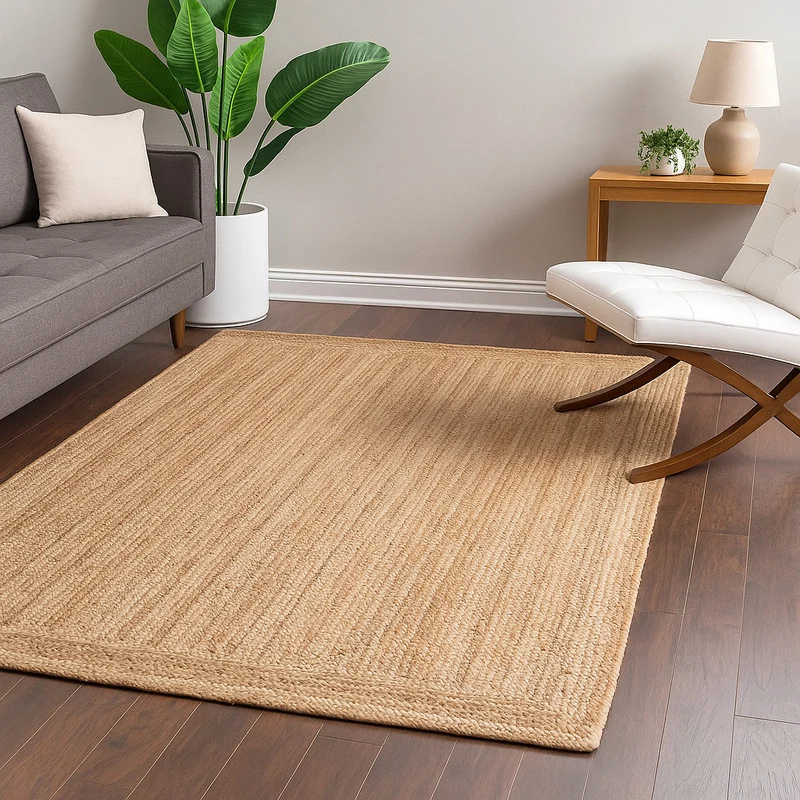
Choosing carpet is often presented as a decision between colour, pattern and softness. Yet the material itself can have a much greater influence on how a floor looks, feels and performs over time.
Natural fibres offer an alternative to highly manufactured flooring, bringing organic texture and variation into residential and commercial interiors. Among the interesting combinations available are Natural JUTE & WOOL Carpets, which bring together two very different fibres to create a floorcovering with a distinctive character.
Jute contributes its recognisable plant-based texture, while wool is known for its warmth, softness and natural resilience. When these fibres are combined thoughtfully, the result can provide a different experience from using either material independently.
Understanding what each fibre contributes is important when deciding whether this type of carpet is appropriate for a particular interior.
Understanding the Two Fibres
Jute is a natural plant fibre traditionally used in woven products, textiles, rope and other practical applications.
Its appeal in interiors comes largely from its natural appearance and visible texture. It can introduce an earthy, relaxed quality to a room.
Wool, on the other hand, is an animal fibre that has been used in carpets for generations.
It is valued for its softness, warmth and ability to recover from everyday compression.
Combining these materials creates an opportunity to balance their individual characteristics.
Rather than treating natural flooring as one category, it is useful to think about what each fibre contributes to the finished product.
Why Combine Jute and Wool?
Different materials can provide complementary qualities.
Jute can contribute a distinctive woven appearance and natural texture.
Wool can provide softness and a more comfortable surface underfoot.
The combination can therefore be useful for interiors where homeowners want a natural appearance but also want the tactile comfort associated with wool.
This makes blended natural carpets particularly interesting for living areas, bedrooms, studies and selected commercial interiors.
The precise characteristics will depend on the construction and proportions of the individual product, so product specifications remain important.
A Different Approach to Neutral Interiors
Neutral interiors remain popular because they provide flexibility.
White, beige, cream, grey and earthy tones can make a room feel spacious and allow furniture and artwork to change without requiring a complete flooring replacement.
The challenge is that too many flat neutral surfaces can make an interior feel lacking in depth.
Natural jute and wool can help solve this through texture.
Instead of relying on strong colour contrast, the floor itself becomes part of the visual layering of the room.
The natural variations in fibre and weave can create subtle detail without becoming a dominant pattern.
Natural Flooring in Living Rooms
Living rooms are often the heart of a home, meaning the floor needs to work with both everyday life and interior design.
A natural jute and wool carpet can provide a comfortable base for sofas, chairs, coffee tables and other furniture.
Its natural character can complement timber flooring, cabinetry and furniture.
In a minimalist living room, it can add warmth.
In a traditional interior, it can reinforce the use of natural materials.
In a contemporary home, it can soften clean architectural lines.
The surrounding design will influence how the carpet is perceived.
Comfort Underfoot
One of the significant differences between a woven plant fibre and wool is the tactile experience.
Wool is naturally associated with softness and warmth, making it a popular material for areas where people regularly walk barefoot.
When combined with jute, it can create a floor that has more visual structure than a conventional wool carpet while retaining some of the comfort associated with wool.
This can be particularly appealing in bedrooms and living spaces.
The exact feel will depend on the construction, fibre ratio, pile and backing, so samples should always be assessed physically where possible.
Bedrooms and Quiet Spaces
Bedrooms don’t generally experience the same level of traffic as hallways or entrances.
This makes them suitable for flooring choices that prioritise comfort.
A natural jute and wool carpet can create a warm foundation beneath beds and other bedroom furniture.
The natural appearance also works well with linen bedding, timber furniture and soft neutral colours.
Instead of introducing a strong decorative pattern, the carpet can provide subtle texture that supports a calm interior.
Home Offices
A home office often needs to sit somewhere between a residential and professional environment.
Natural materials can help achieve that balance.
A jute and wool carpet can provide visual warmth while maintaining a relatively restrained appearance.
It can work alongside timber desks, shelving, leather chairs and neutral walls.
Where office chairs with wheels are used regularly, however, the suitability of the specific carpet should be considered. Concentrated rolling movement can create different wear from ordinary foot traffic.
Practical use should always influence the final selection.
Wool and Natural Temperature Comfort
Wool is naturally associated with warmth, which can contribute to a comfortable indoor environment.
This can be particularly useful in bedrooms and living spaces where people spend significant amounts of time.
Flooring is only one element of indoor comfort, of course. Insulation, windows, heating, ventilation and the building itself all have a much larger influence on temperature.
Still, the tactile and thermal characteristics of a natural carpet can contribute to the overall experience of a room.
Jute Adds Visual Texture
Wool carpets can have a very soft and uniform appearance.
Jute can introduce another dimension.
Its natural fibre structure can create visible texture and variation.
This can be particularly useful in interiors where the design relies on subtle material differences rather than bold patterns.
A jute and wool carpet can therefore act as a bridge between comfort and natural visual character.
Choosing Carpet for High-Traffic Areas
Not every room is equally suitable for the same carpet.
Hallways, entrances and staircases can receive considerably more traffic than bedrooms.
Furniture may also move frequently across these areas.
When considering a natural jute and wool carpet for a busy space, the construction and performance specifications should be examined carefully.
A product intended for a quiet residential room should not automatically be assumed to be appropriate for a heavily trafficked commercial environment.
The fibre combination is only one part of the overall performance.
Natural Flooring for Commercial Interiors
Commercial environments can benefit from natural materials when the design objective is to create a more welcoming and sophisticated atmosphere.
Boutique offices, meeting rooms, executive areas, hospitality spaces and selected retail environments may all benefit from natural textures.
However, commercial flooring typically faces greater demands.
There may be more people walking through the space, more frequent cleaning and greater movement of furniture.
The material therefore needs to be matched carefully to the intended application.
Working with Furniture
A natural carpet can act as a visual foundation for furniture.
Timber furniture generally works naturally with jute and wool because the materials share an organic quality.
Leather can introduce contrast.
Metal furniture can provide a more contemporary counterpoint.
Glass can create another layer of contrast by allowing the carpet texture to remain visible beneath the furniture.
Good interior design often comes from combining materials that are different enough to be interesting but complementary enough to feel cohesive.
Layering with Rugs
A carpet doesn’t necessarily need to remain visually plain.
A smaller rug can be placed over the carpet to create a defined zone.
For example, a decorative rug could sit beneath a coffee table while the natural carpet remains visible around the seating area.
This approach allows homeowners to change the appearance of a room without replacing the underlying floor.
Natural rugs made from Sisal, Abaca, Jute or other fibres can create different textures over the carpet.
The combination should be considered carefully so that the materials complement rather than compete with each other.
Colour and Natural Variation
Natural fibres can display variations that aren’t normally found in highly uniform synthetic products.
Jute may contain subtle variations in tone.
Wool can also have natural characteristics that influence its appearance.
When combined, these variations can create a floor that feels less manufactured.
For homeowners accustomed to perfectly uniform flooring, this is worth understanding before purchase.
For those who appreciate natural materials, the variation can be one of the most attractive characteristics.
Maintenance Considerations
Natural carpets should be cared for according to the manufacturer’s recommendations.
Regular vacuuming is an important part of everyday maintenance because it removes dust, grit and other particles before they become embedded.
Spills should be addressed promptly using a method suitable for the specific carpet.
Aggressive chemicals or excessive moisture should not be used unless specifically recommended.
Professional cleaning can be considered when deeper cleaning is required.
The objective is to remove dirt without damaging the natural fibres.
Pets and Family Life
Homes with children and pets require additional consideration when choosing flooring.
The amount of traffic, likelihood of spills and frequency of cleaning should all be considered.
Natural fibres can be suitable in many family environments, but no flooring material is completely maintenance-free.
The best approach is to assess the actual lifestyle of the household.
A quiet adult household may have very different requirements from a busy family with young children and several pets.
Sustainability and Material Selection
Both jute and wool are natural materials, which is one reason they appeal to consumers interested in reducing reliance on synthetic products.
However, the environmental impact of a floorcovering depends on more than whether the fibres are natural.
The manufacturing process, transportation, backing materials, installation and expected lifespan should also be considered.
A durable product that remains in use for many years can reduce the need for replacement.
Maintenance therefore plays an important role in responsible flooring decisions.
Choosing Between a Blend and a Single Fibre
There is no universal answer to whether a blended natural carpet is better than a single-fibre product.
The choice depends on what the room requires.
A Jute Rug might be appropriate where texture is the main priority.
A wool carpet may be selected when softness and comfort are particularly important.
A jute and wool combination may make sense when the design calls for a balance between the two.
Similarly, Natural SISAL Floorcovering may be more appropriate in another part of the property where a firmer natural surface is desired.
The right choice is therefore room-specific.
Think About the Whole Property
Natural flooring can also be coordinated throughout a home without using exactly the same product everywhere.
A bedroom could use a jute and wool carpet.
The living room might feature a natural sisal floor with a decorative rug.
A study could incorporate an abaca rug.
An entrance might use a more hard-wearing natural fibre.
The materials don’t need to match perfectly.
Shared neutral tones and natural textures can create enough visual continuity to make the overall interior feel connected.
Making a Considered Flooring Decision
Before selecting a natural carpet, consider how the room will actually be used.
Think about foot traffic, furniture movement, pets, children, cleaning, natural light and moisture.
Then consider the aesthetic requirements.
Do you want softness?
Texture?
A neutral foundation?
A strong natural appearance?
A combination of these?
Answering these questions first makes it easier to select the right material.
Floorspace Natural JUTE & WOOL Carpets demonstrate how two different fibres can be brought together to create a floorcovering with its own combination of texture, warmth and comfort. They can suit a range of residential interiors and selected commercial spaces, particularly where natural materials and understated design are important. As with any flooring decision, the material should be matched to the room’s traffic, maintenance requirements and intended use.
For homeowners, interior designers and businesses across Melbourne and surrounding suburbs, Floorspace offers natural flooring solutions including Natural JUTE & WOOL Carpets, Sisal, Jute, Seagrass and other natural fibre options. Considering the material, construction and room requirements together can help create a floor that remains both practical and visually relevant for years to come.