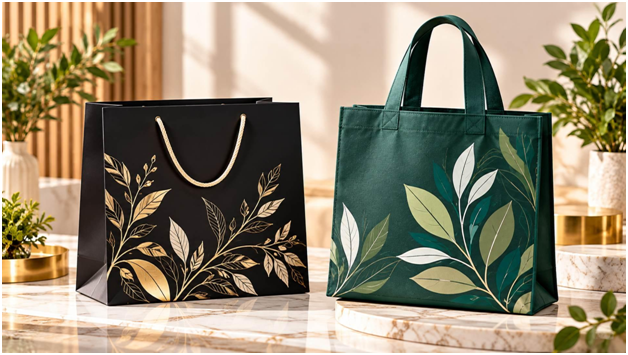
Choosing the right carrier bag involves more than selecting packaging that holds products securely. The material, appearance, durability and ease of reuse all influence how customers experience a purchase and how they perceive a business. Paper and reusable fabric bags each offer distinct advantages, so the right option depends on the products you sell, your customers’ expectations and your environmental priorities.
Well-chosen printed carrier bags can also help maintain a consistent brand identity beyond the checkout. Understanding the differences between paper and reusable alternatives makes it easier to balance presentation, everyday practicality, cost and responsible material choices without compromising the customer experience.
Understanding the Difference Between Paper and Reusable Bags
Paper bags are widely used in retail because they are lightweight, easy to store and available in different styles. Options include simple kraft paper bags, twisted-handle designs and more decorative laminated paper bags. These formats suit different purposes, from everyday shopping and takeaway purchases to gift packaging and premium retail presentation.
Reusable bags, including cotton, canvas and jute options, are designed to be used repeatedly. Their fabric construction can make them suitable for carrying purchases on future shopping trips, while their larger printable surfaces provide room for distinctive branding.
Neither material is automatically the best choice for every business. A bag intended for a lightweight purchase may have different requirements from one expected to carry heavier items or remain useful for months.
When Paper Carrier Bags Are the Better Choice
Paper bags suit clothing shops, gift retailers and bakeries that need practical, attractive packaging. Kraft paper offers a simple finish, while twisted handles and laminated surfaces provide different presentation options.
Paper bags can be recycled where local facilities accept them, although coatings and handles may affect disposal. As paper can weaken when wet, choose a suitable design for your products and expected conditions.
Why Reusable Bags May Suit Your Brand Better
Reusable bags made from cotton, canvas or jute are suitable for customers who want packaging they can use on future shopping trips. They can also help keep your brand visible beyond the original purchase.
Cotton and canvas offer a clean, modern appearance, while jute provides a more textured finish. Choose a material that reflects your brand and meets your customers’ needs.
However, environmental benefits depend partly on how often bags are reused. Consider their durability, storage convenience and care requirements before making a decision.
Comparing Cost, Durability and Environmental Impact
The initial purchase price is only one part of the decision. Businesses should consider the bag’s expected lifespan, how frequently customers will use it and the practical requirements of their products.
Paper bags may be economical for everyday retail use, particularly when the chosen format matches the product and the business’s order quantities. Reusable fabric bags may require a greater initial investment per bag, depending on their construction and print requirements. Their value should therefore be assessed against their intended frequency of use rather than appearance alone.
Durability also varies within each category. A well-made paper bag with suitable dimensions and handles may be adequate for a typical retail purchase, while a fabric bag can be useful for repeated trips. Neither material should be assumed to withstand every load. Test the bag with representative products, paying attention to the base, handles, seams and weight distribution.
Environmental impact requires a similarly balanced assessment. Paper production uses resources and energy, while fabric manufacturing can involve substantial material and water inputs. Repeated use, product lifespan, transport and end-of-life disposal all influence the overall picture.
Recyclability or biodegradability alone does not establish which bag has the lower environmental impact in every situation. Businesses should examine credible information about material sourcing, recycled content where relevant, durability and local disposal options before making environmental claims.
How to Choose the Right Bag for Your Business
A useful starting point is to assess how the bag will be used in practice. The following factors can help narrow the options:
- Product weight and size: Match the bag’s dimensions, base and handles to the items customers will carry.
- Brand positioning: Choose a plain kraft finish, premium laminated appearance or fabric design that reflects your visual identity.
- Customer habits: Consider whether shoppers need convenient packaging for a single journey or a bag they can carry repeatedly.
- Storage and distribution: Check how much space the bags occupy, how they are delivered and how easily staff can handle them during busy periods.
- Budget and order volume: Compare the total cost of the required quantity, including printing and any additional finishing.
- Environmental priorities: Review material composition, expected reuse, recycling availability and the evidence supporting any sustainability statements.
- Branding requirements: Check print colours, artwork placement and how clearly your logo will appear on the selected material.
Before committing to a large order, request samples where possible. Examine the material, print quality, handle comfort and overall construction. Testing representative products in the bags can also reveal whether the chosen dimensions and strength are suitable.
If your business needs a consistent appearance across several packaging formats, consider how each bag will work alongside your other branded materials. A coordinated approach can make the customer experience feel more considered without requiring every product to use the same material.
Combining Presentation with Practicality
Some businesses may benefit from using both paper and reusable bags rather than choosing one option exclusively. Paper can serve everyday transactions, while fabric bags can be offered for customers who want a longer-lasting shopping accessory. This approach allows packaging choices to reflect different products, occasions and customer preferences.
For brands investing inprinted carrier bags, consistency matters, but so does suitability. A design that looks attractive on paper may need adjustments to work well on fabric. Colours, logo placement and the available print area should be checked against the chosen material before artwork is approved.
It is also important to avoid making sustainability claims that the materials cannot substantiate. Terms such as recyclable, reusable and biodegradable describe different characteristics. Use them accurately, and check the relevant product specifications and local disposal guidance before communicating environmental benefits to customers.
In Summary
Paper and reusable bags serve different purposes. Paper is a practical choice for convenient retail packaging and can provide anything from a simple kraft finish to a more polished presentation. Cotton, canvas and jute bags are suitable alternatives when repeated use is a realistic expectation and durability is a priority.
Before selecting printed carrier bags, assess your products, customers, budget, branding requirements and environmental objectives together. Request samples, test the bags with typical purchases and check disposal guidance for the materials involved. The most suitable option is the one that meets your customers’ needs while supporting your brand’s identity and making practical sense for your business.