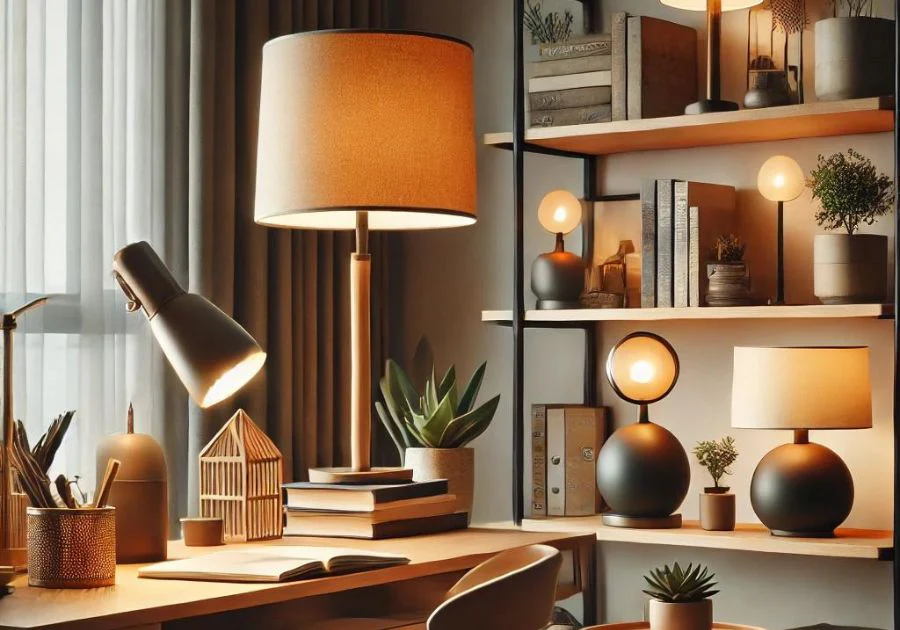
The Lamp Accumulation Problem Nobody Admits To
It starts innocently enough. A small lamp for the side table. Another one for the console because the corner felt dark. A third was given to the bedroom because it was on sale and looked beautiful in the shop. Soon, there will be four or five lights throughout the home. Each one only performs half of what it’s meant to do, and none of them are very intriguing. It seems less like a well-thought-out design and more like a chaos as a whole. Most locations already have enough light, therefore they don’t need more. They have a lighting problem that requires one good one — chosen properly, sized correctly, and placed with actual thought behind it.
One Lamp With Real Presence Changes Everything
A large table lamp black in finish does something that three smaller lamps spread around a room simply cannot replicate. It anchors the space. It provides a focal point. It gives the eye something definite to land on instead of scanning across a collection of modest, forgettable fittings that blend into the background. The Dark Star Large Table Lamp is a good example of this — it has enough physical presence and visual weight to hold a corner or a console on its own without needing backup from a second or third source. The Gideon Table Lamp with its black shade produces a similar effect — a single object that commands the surface it sits on rather than timidly sharing it.
Why People Buy More Lamps Instead of Better Ones
Most rooms have too many lights because each one was acquired to answer a particular issue without looking at the space as a whole. The side table felt bare so a small lamp filled the gap. The reading corner was dim so another lamp appeared. The entryway needed something so a third was added. Each decision made sense individually. Collectively, the room started to feel busy without feeling properly lit. A single large table lamp black in colour and generous in proportion — placed on the right surface in the right spot — often solves three problems at once because its light output covers a wider area and its visual impact carries further across the room.
When a Black Gold Lamp Replaces the Need for Multiples
A black gold lamp adds something that plain fittings in multiples rarely achieve — a sense of luxury that does not depend on repetition. The gold element catches and reflects light, which means the lamp is not just producing illumination from the bulb but also bouncing warmth from its own surface. The Waldorf Table Lamp in Copper operates on a similar principle — the metallic accent interacts with light in a way that extends the lamp’s visual reach beyond what a matte surface alone would manage. One well-chosen lamp doing this work replaces two or three plainer alternatives that were never quite pulling their weight individually.
The Honest Answer Lives in Your Room, Not in a Rule
In some places, layered lighting from several sources at different heights can be helpful. A large living room with distinct seating areas is one example. But for most average-sized rooms — a bedroom, a compact living room, an entryway — one properly chosen large table lamp black in finish will do more for the space than three modest ones ever could. Fewer lamps, better chosen, is almost always the right direction.